
About the Database
Database as Book” is an experimental scholarly form that claims the symbolic authority of the book while organizing materials through database logics. Rather than presenting a single linear argument, it assembles discrete artifacts in relational structures that foreground the labor of making and curating data as valid scholarly work in its own right, without requiring translation into a unified narrative voice.
We use software called the “Platform for Experimental Collaborative Ethnography” (pronounced as “peace”) to house the database of this book project. The Platform for Experimental and Collaborative Ethnography (PECE) is an open-source software that provides digital space for sharing, collaborative analysis, and creative presentation of ethnographic data and writing. In comparison to most qualitative data software, which are built on a coding paradigm, the platform’s architecture reflects poststructuralist commitments to multiplicity, reflexivity, and layered interpretation.
Intro to PECE
How the Database Works
At first glance, the objects gathered in our database as book might appear unrelated: maandamano (protests in Kiswahili), public graffiti, artificial intelligence tools, higher education policy, and the digital object identifier. We believe what ties them together is not a single domain or scale, but a shared concern with how infrastructures shape knowledge and how people intervene in those infrastructures from within, particularly in resisting power imbalances.
In addition to our scholarly interest in knowledge making, we are approaching infrastructuring itself as a site of struggle. Decisions about standards, platforms, identifiers, archives, and modes of publication are not only technical choices; they are political acts that shape participation, ownership, and authority. In Kenya, where research systems have long been shaped by colonial legacies and contemporary global hierarchies, these decisions carry particular weight.
This orientation places the book in conversation with STS scholarship on infrastructure and power (Bowker and Star 1999; Anand, Gupta, and Appel 2018), as well as African and Southern scholarship on epistemic injustice and decolonial theory (Ndlovu-Gatsheni 2018; Santos 2014). At the same time, it departs from both in important ways. Decolonial scholarship has powerfully critiqued Eurocentric epistemologies and imperial knowledge formations, foregrounding the geopolitical conditions under which knowledge is authorized. Yet much of this work has centered epistemic critique over the material infrastructures through which knowledge is stabilized and circulated. Conversely, debates on scholarly communication and open science have often foregrounded technical solutions while bracketing questions of place and power (Hillyer et al. 2020). We begin from the premise that these concerns are inseparable.
Navigating the Artefacts & Essays
This is not a conventional edited volume organized around thematic chapters or disciplinary boundaries. Instead, the book is built around a collection of artifacts including documents, images, links to platforms, policies and other data sources that serve as entry points into the broader questions of knowledge and power that concern us. Each contributor assembled and curated particular artifacts related to their particular chapter’s argument. Each contributor also responded to a shared set of analytic questions. These reflections, developed individually and collectively, are presented alongside the artifacts, enabling comparison across our diverse domains.
We call this project a “Database as Book” as an intentional appropriation. The book remains one of the most powerful genres in academic knowledge production, conferring legitimacy, coherence, and durability. Rather than position this work as a website or blog (formats often implicitly coded as informal), we claim the symbolic authority of the book while reshaping its internal architecture. From early in the project, we experimented with three metaphors to think through what we were building. At times, we imagined a curated exhibit within an art collection: discrete artifacts placed in relation, some speaking directly to one another, others standing alone, inviting readers to move spatially rather than linearly. At other moments, we turned to the logic of database tables, where each artifact operates as a row connected through shared attributes, enabling arguments to branch, recombine, and surface patterns not predetermined by a single narrative arc. Finally, we retained the metaphor of chapters within a book, not as a capitulation to convention, but as an acknowledgment that many readers seek narrative orientation and thematic coherence. Holding these metaphors together allowed us to inhabit the authority of the “book” while foregrounding relationality, multiplicity, and versioning.
Reasoning behind the database
The funding support from COPIM for this experimental book project engendered new collaborations where African Minds joined in the experiment as our publisher, and the Platform for Experimental Collaborative Ethnography (PECE) gave RDS a digital portal to upload and reflect on our artefacts. Designer Karugu Maina used the kanga (a rectangular cloth commonly found among East African coastal cultures and discussed in the ‘Methali (Khanga Wisdoms)’ section as a symbol that provided visual coherence and depth to the work. We held two events in Nairobi, Kenya, in 2024 and 2025 (see here and here), inviting a select group of scholarly and publishing colleagues to shape the work through their responses to the concept of the project. The result is a book that may be accessed through multiple formats: a linear arrangement of chapters, which is the more conventional approach; a discussion built around each particular author’s assembled artifacts available on the Research Data Share repository (hosted by PECE) and including annotations from the Nairobi event participants: and this website.
Referencing the Work
We license all our writing under a Creative Commons Attribution-NonCommercial-ShareAlike 4.0 International (CC BY-NC-SA 4.0) license.
This means that you may:
- Share — copy and redistribute the material in any medium or format
- Adapt — remix, transform, and build upon the material
When you use it, you must:
- Give appropriate credit
- Indicate if you modified the material and retain an indication of previous modifications. If you remix, transform, or build upon the material, you must distribute your contributions under the same license as the original (CC BY-NC-SA 4.0).
You may not:
- Use the licensed material for commercial purposes. Commercial use means primarily intended for or directed towards commercial advantage, payment or monetary compensation, which would be a violation of the license.
Navigation
The Database
Want to delve deeper? Visit the Platform for Experimental, Collaborative Ethnography (PECE: pronounce “peace”). It is an open-source digital platform that supports multi-sited, cross-scale ethnographic and historical research.
Navigating the DatabaseLink to the Database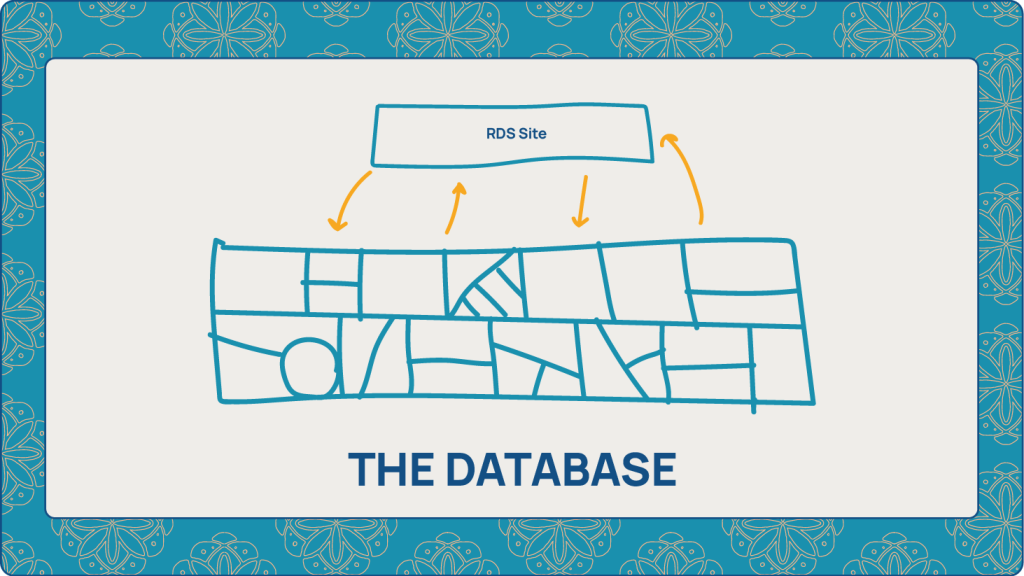

The Physical Book
Want to purchase a physical copy? Order your copy from African Minds if you're based in Africa. If you're outside the continent, place your order with the African Books Collective.
Get YoursWordPress Essays
Want to learn more about individual topics of interest? Read each singular vignette from each author's perspective, research and lived experience.
Dive In